
Leprechaun in the Hood Is Ridiculous—and That’s Why It Still Gets Watched
- The OG Network
- Jan 23
- 5 min read
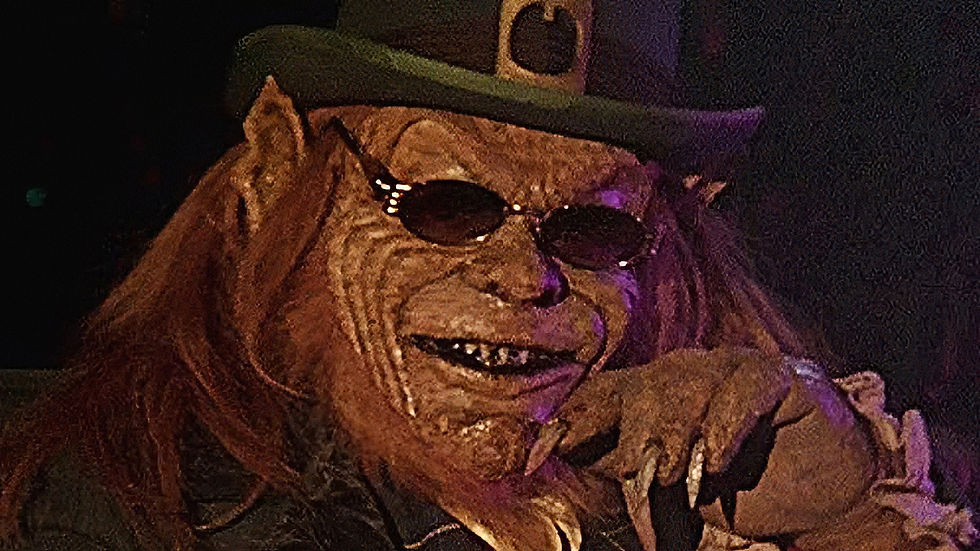
At some point around the year 2000, a room full of adults heard the words Leprechaun in the Hood out loud—and instead of stopping the conversation, they greenlit it. That fact alone does a lot of the work for this movie.
There’s no easing into the premise. A wisecracking killer leprechaun drops into the hood, spitting rhymes and delivering one-liners with complete confidence.
The movie knows how wild that sounds, and instead of apologizing for it, it leans all the way in. From the opening moments, disbelief isn’t a hurdle—it’s part of the experience.
That’s why the film still gets watched. Not because anyone thinks it’s secretly great, but because it commits to its own nonsense without hesitation.
There’s something almost admirable about that level of audacity. It doesn’t wink at the audience or ask for forgiveness. It just exists, fully aware that the premise alone is going to make people say, “There’s no way this is real.”
The Era That Made This Possible

To understand why Leprechaun in the Hood exists, you have to remember the moment it came from.
The late ’90s and early 2000s were the peak of the straight-to-video era, when horror franchises were less concerned with prestige and more interested in staying visible. If a concept sounded wild enough to stand out on a rental shelf, it had a shot.
This was also a time when urban culture had fully crossed into the mainstream—but often through exaggeration. Hip-hop was commercially dominant, yet Hollywood still treated it as a novelty space where anything could be dropped as long as it felt “street” enough. That tension created a lane for movies that didn’t need to be thoughtful, just loud and different.
Horror franchises were especially willing to experiment. Once the original premise ran out of steam, sequels became testing grounds for increasingly absurd ideas. Space, Vegas, the hood—no setting was off limits if it promised attention.
Leprechaun in the Hood wasn’t an accident; it was the logical outcome of an industry chasing shock value in a crowded market.
Looking back, the movie feels less like a mistake and more like a snapshot. It reflects an era when boundaries were loose, taste was secondary to visibility, and the question “Should we?” was often overridden by “Will people watch?” The answer, clearly, was yes—and decades later, people still are.
Not Good—but Not Boring Either
By any traditional measure, Leprechaun in the Hood doesn’t work. It isn’t scary in a meaningful way, the comedy often misses on purpose, and the performances swing wildly between committed and completely unserious. If you’re looking for tight storytelling or tonal balance, this movie isn’t even trying to meet you halfway.
And yet—it’s not boring.
That’s the difference. Plenty of low-budget horror films from the same era have vanished because they were forgettable. This one stuck because every few minutes it reminds you that you’re watching something genuinely unhinged. Whether it’s the dialogue, the character choices, or the sheer confidence of the leprechaun himself, the movie refuses to fade into the background.
It also helps that the film understands its own energy. It doesn’t slow down to explain itself or chase credibility. Scenes move quickly, jokes land or don’t, and the story barrels forward without worrying about cohesion. That momentum keeps viewers engaged, even when the logic collapses.
In the end, Leprechaun in the Hood survives on entertainment value alone. You’re not watching to critique structure—you’re watching because the movie keeps asking, “Can you believe this?” And somehow, that question never gets old.
Unintentional Comedy and Cult Appeal

A big reason Leprechaun in the Hood refuses to disappear is that it accidentally became funny in ways no one could have planned. Not clever funny—quote-it-with-your-friends funny. The kind of humor that comes from total commitment to bad ideas.
The leprechaun’s rhymes, the exaggerated performances, the moments that clearly weren’t meant to land as jokes—all of it stacks into a viewing experience that’s better shared than watched alone.
This is the kind of movie people put on at night with commentary running the entire time. Laughter isn’t coming from punchlines; it’s coming from disbelief.
That’s where the cult appeal lives. Over time, the film stopped being judged by traditional standards and started being enjoyed for its audacity. It became a “you have to see this” movie—not because it’s great, but because it’s impossible to explain without showing it. That word-of-mouth energy keeps it circulating long after better-made movies faded away.
Cult classics often aren’t polished—they’re memorable. Leprechaun in the Hood earns its place by leaning so far into its own ridiculousness that it becomes unforgettable. Once a movie crosses that threshold, quality stops being the point. Experience becomes the draw.
Walking the Line Between Experiment and Exploitation

This is where Leprechaun in the Hood gets more complicated—and more interesting to talk about.
The movie isn’t just ridiculous; it’s also a product of an industry moment where “the hood” was treated as a flexible backdrop rather than a real place with nuance.
On one hand, the film clearly leans into caricature.
Characters are broad, situations are exaggerated, and the setting is often used as a gimmick to refresh a tired franchise. That’s the exploitative side: urban culture as a shortcut to edge, attitude, and novelty without much responsibility attached.
On the other hand, the movie is also an experiment—albeit a sloppy one. It reflects an era when studios were throwing genre boundaries together to see what stuck. Horror met hip-hop not out of care, but curiosity. The result wasn’t respectful, but it was revealing. It showed how mainstream entertainment viewed urban audiences at the time: big enough to market to, but not important enough to portray thoughtfully.
That tension is part of why the movie still gets discussed. You can laugh at it and still recognize what it represents. It’s a reminder that some films age into conversations not because they were well made, but because they accidentally captured how culture was being handled in that moment.
Why People Still Press Play

At this point, no one is stumbling into Leprechaun in the Hood by accident. People press play because they know what they’re getting—or at least, they know it’s going to be wild.
For some, it’s nostalgia. Not for the movie itself, but for an era when late-night cable and video rentals were full of risky, unfiltered ideas. For others, it’s curiosity. The title alone feels like a dare. You watch because you want to see how far it goes and whether it’s as ridiculous as you’ve heard.
There’s also comfort in how low the stakes are. This isn’t a movie that asks for emotional investment or careful analysis while you’re watching it. It’s background chaos in the best way—something you can laugh at, talk over, and react to in real time. That makes it easy to return to.
In the age of algorithms and polished reboots, there’s something refreshing about a movie that exists purely because someone said “why not?”
Leprechaun in the Hood survives because it offers an experience modern movies rarely do anymore: unapologetic nonsense that doesn’t try to justify itself.
What Leprechaun in the Hood Represents Now
Two decades later, Leprechaun in the Hood isn’t remembered as a good movie—it’s remembered as a moment. A snapshot of a time when franchises were desperate, boundaries were loose, and nobody was particularly concerned with how things would age.
What gives the film its staying power now isn’t quality, but clarity. It represents an era when shock value could still carry a project, when urban settings were treated like novelty playgrounds, and when the line between parody and exploitation wasn’t carefully monitored. That context makes the movie more interesting today than it ever was on release.
In hindsight, the film works as a cultural artifact. It shows how entertainment chased attention at all costs, and how certain ideas were allowed through simply because they felt bold. Watching it now isn’t about endorsement—it’s about recognition.
Some movies last because they’re great. Others last because they’re impossible to forget. Leprechaun in the Hood falls firmly into the second category—and that’s exactly why it still gets watched.


Comments